
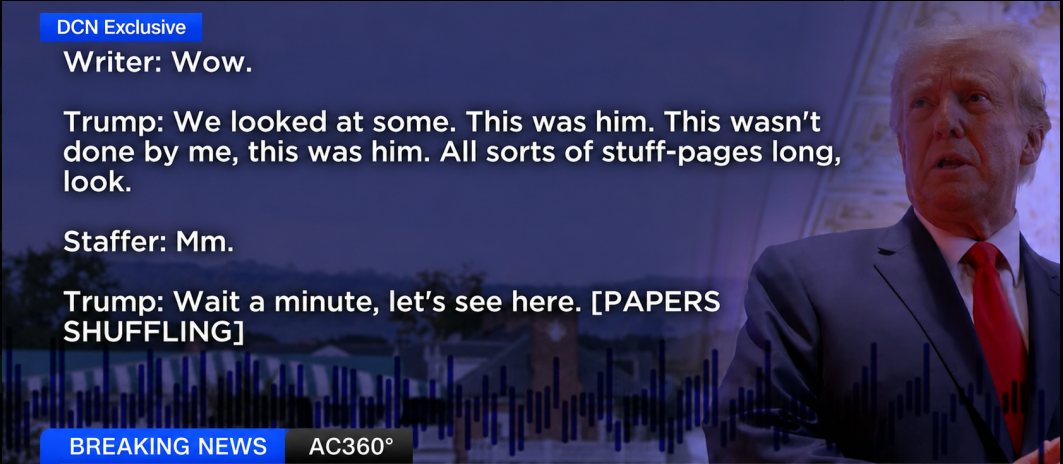
In an exclusive interview with DCN News, Donald Trump criticized the rise of “AI slop,” warning that synthetic clips of public figures are blurring the line between satire, misinformation, and manipulation.
In an exclusive and unfiltered interview with DCN News, Donald Trump delivered a sharp critique of what he called the growing wave of “AI slop” flooding the internet—particularly videos that use artificial intelligence to mimic public figures, including himself.
Speaking with characteristic bluntness, Trump described the phenomenon as “out of control,” arguing that these AI-generated clips blur the line between satire, misinformation, and manipulation. “You see these videos—they look real, they sound real—but they’re totally fake. It’s dangerous,” he said.
“Addictive and Misleading”
Trump didn’t stop at criticizing the technology itself. He also took aim at the culture forming around it, claiming that the rapid consumption of such content is becoming unhealthy.
“People are watching this stuff nonstop,” he said. “It’s like ants snorting cocaine—completely addicted, can’t stop. That’s what it feels like.”
The remark, while provocative, underscores a broader concern shared by many public figures: that AI-generated media is not only spreading quickly but also reshaping how audiences engage with information.
The Rise of “AI Slop”
The term “AI slop” has recently gained traction online, used to describe low-quality, mass-produced AI content—often sensational, misleading, or created purely for clicks. Trump argued that much of this content exploits recognizable personalities to gain attention.
“They take your voice, your face, and suddenly you’re saying things you never said,” he noted. “It’s not just me—it’s happening to everyone.”
Calls for Accountability
While Trump did not outline specific policy proposals, he hinted at the need for stronger oversight and clearer boundaries in AI development and distribution.
“There has to be some kind of control,” he said. “You can’t just let this run wild.”
A Broader Debate
Trump’s comments add fuel to an ongoing global debate about artificial intelligence, free speech, and digital ethics. As AI tools become more accessible, the line between authentic and artificial content continues to blur—raising questions about responsibility, regulation, and the future of media.
Whether one agrees with his tone or not, Trump’s remarks reflect a growing unease about the speed and scale at which AI-generated content is reshaping the online landscape.